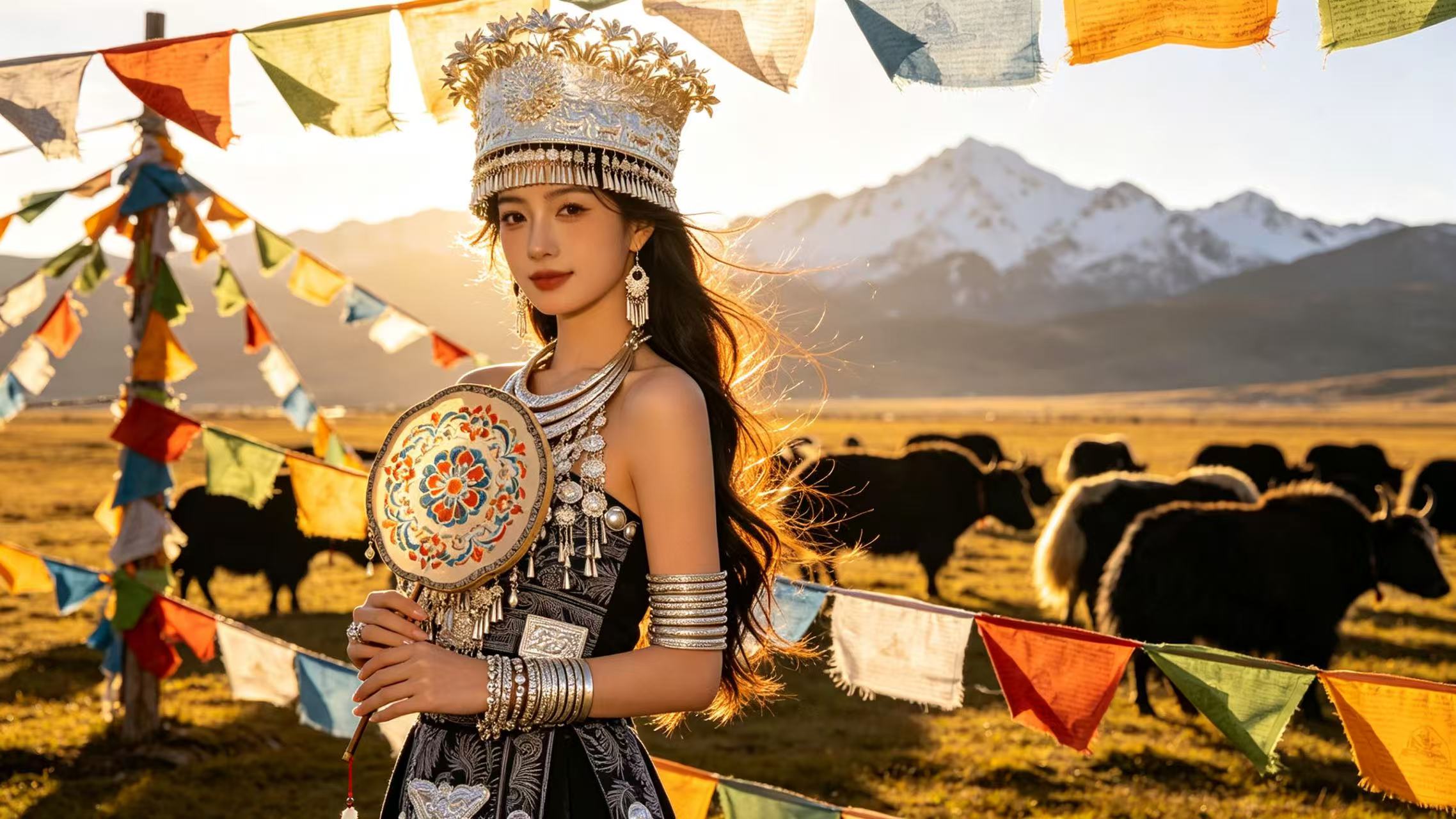
Dai silver is one of the important business cards of Xishuangbanna. In recent years, the historical culture behind it has been underestimated. A few years ago, when traveling to Xishuangbanna, Dai silver was a must-buy souvenir. However, due to some unavoidable reasons in recent years, many outsiders have misunderstandings about Dai silver. In fact, Dai silver is not an ordinary souvenir, but a craft with rich historical and cultural connotations. Dai silver is exquisitely made, has unique meanings, and comes in a variety of styles. From decorations to daily utensils and Buddha mascots, no matter the recipient is men, women, the elderly or children, you can find a suitable and unique gift. As one of the unique business cards of Xishuangbanna, Dai silver should be rediscovered both in terms of its historical culture and artistic connotation.
-
- Hmong
- Agate bracelet
- $43.99
- Handcrafted Boho Red Agate Silver Bracelet for Women Ethnic Style…
- Select options This product has multiple variants. The options may be chosen on the product page
-
- Jingdezhen
- Artisan bracelet
- $42.99
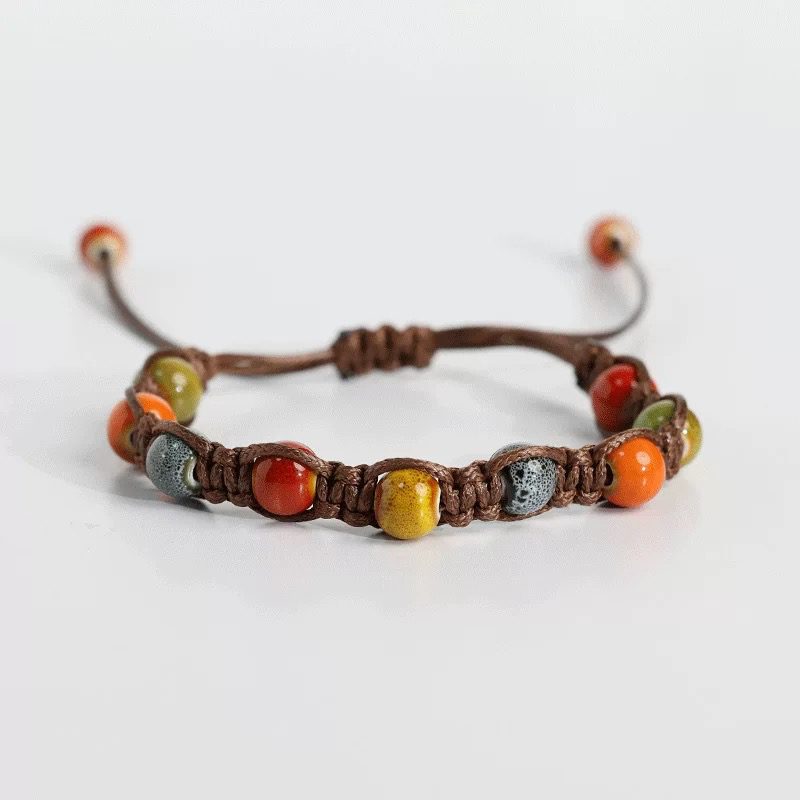
- Handmade Woven Colorful Ceramic Beaded Bracelet Adjustable Vintage Boho Jewelry…
- Select options This product has multiple variants. The options may be chosen on the product page
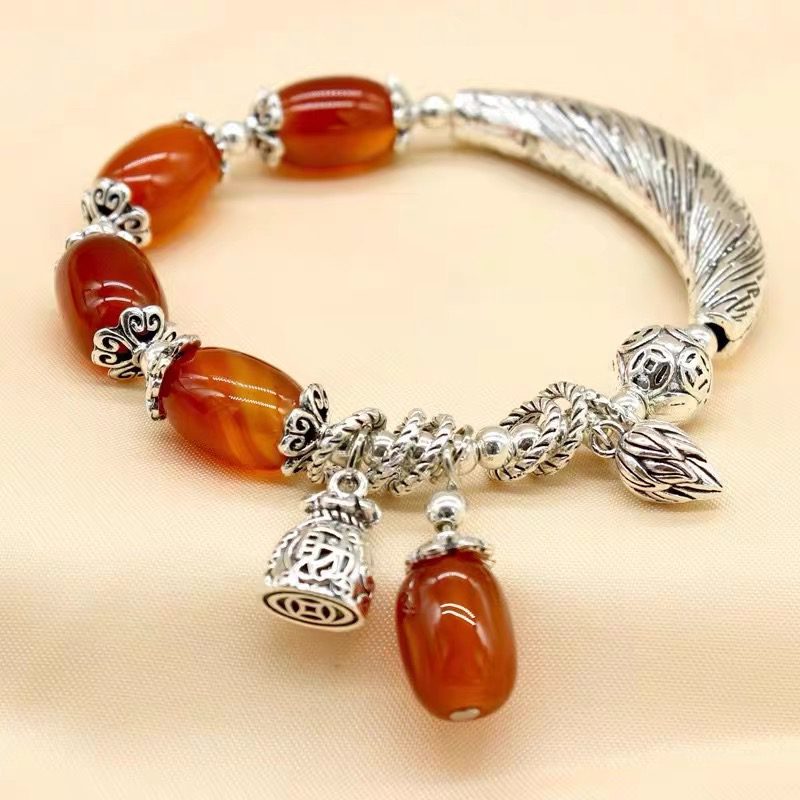
Dai silver is a general term for Dai silver ornaments in Xishuangbanna, Yunnan Province. The Dai people believe that silver symbolizes purity, has the function of warding off evil spirits and toxins, and is also a symbol of power and wealth.
In addition to widely using silverware as ritual tools for religious sacrifices, the Dai people also like to make silver into various ornaments to wear on their heads, bodies and waists. In daily life, they also like to use various silver utensils.
Dai silver is different from ordinary silver in terms of production process, appearance and price. Dai silver is mainly produced by the Dai people in Xishuangbanna, with a relatively complex production process that requires processes such as chiseling, wax carving, and casting. A finished silver ornament needs to go through dozens of processes; the production process of ordinary silver is relatively simple, and it can be made into various shapes through polishing and carving.
Finished products made of Dai silver are usually carved with Buddhist symbols, while ordinary silver has simple patterns with no specific meaning, and their prices are also different. Dai silver has excellent craftsmanship and a long development history, and is deeply loved by the Dai people. Dai silver mainly has two major uses: one is daily utensils such as silver bowls, silver cups, and silver tableware; the other is accessories such as silver necklaces, bracelets, and bangles.
The special belt for royal women during the Dai King period used a worry-free flower as the belt buckle, inlaid with red gemstones as decorations. On the back of the belt buckle is carved the Dai medical four-tower connected heart pattern of wind, fire, water and earth. The leaves of the worry-free flower are used as the movable joints of the belt. The entire belt is made of pure silver without solder, first carved with wax, then hand-chiseled with silver plates, weighing between 500-650 grams. According to the rules of the Dai people, girls wear cloth ropes around their waists before the age of 7, and after the age of 7, they wear silver belts prepared by their parents. Over time, married women have to hang the keys of their homes on the silver belts as a sign, while those without keys on the belts are obviously unmarried women. This sign to distinguish marital status is quite similar to the way some regions wear rings on different fingers to indicate whether they are engaged, married or single, and it is more ethnic.
The phrase “One flower, one world” comes from the Buddhist scriptures. In the past, the Buddha picked a flower, only Kasyapa smiled, and then walked to paradise. This bracelet uses lotus petals as the head and tail of the bracelet, highlighted by red gemstones to show its charm. It is named because the concave patterns of different sizes on the bracelet are chiseled with a pineapple head chisel.
The bracelet designed according to the love story of Zhao Shutun and Peacock Princess Nan Munuo Na in Dai legend combines the elements of bodhi leaves and peacock feathers. The green gemstones on the bracelet have the beauty of water drops on bodhi leaves and the finishing touch of peacock feathers. The entire bracelet weighs about 55-70 grams.
The Dai people in Xishuangbanna have a long history of processing gold and silver ornaments and utensils. According to “Lele History”, when Phaya Chen established the Jinglong Golden Palace Kingdom in present-day Jinghong in 1180 AD, there was already a golden water urn “three cubits wide, three cubits high, weighing 740 kangs, inlaid with seven kinds of treasures”, which shows that the processing technology of gold and silver utensils had reached a high level at that time. In the past, the gold and silver ornaments and utensils of the Dai people were hand-processed by craftsmen known as “Zhang En” (silversmiths) and “Zhang Han” (goldsmiths) among the people. The chieftain’s office in various places had Phaya Ken (a metal management official of Phaya rank) and Zha Zhang Han (a Zha rank official in charge of gold and silver processing), who were in charge of the processing of gold and silver ornaments respectively. The processing techniques mainly included melting, forging, casting, and openwork. The products are divided into royal special silverware and civilian silver ornaments. The biggest difference between the two is that the royal special silverware is inlaid with gemstones of different colors, and the craftsmanship is much more exquisite. The worry-free flower silver belt and four-season worry-free silver bowl in Xishuangbanna’s 2016 music promotional video “Let the World Hear Banna” are examples of Dai royal craftsmanship.